
How Long Does It Take to Learn Piano?
Published
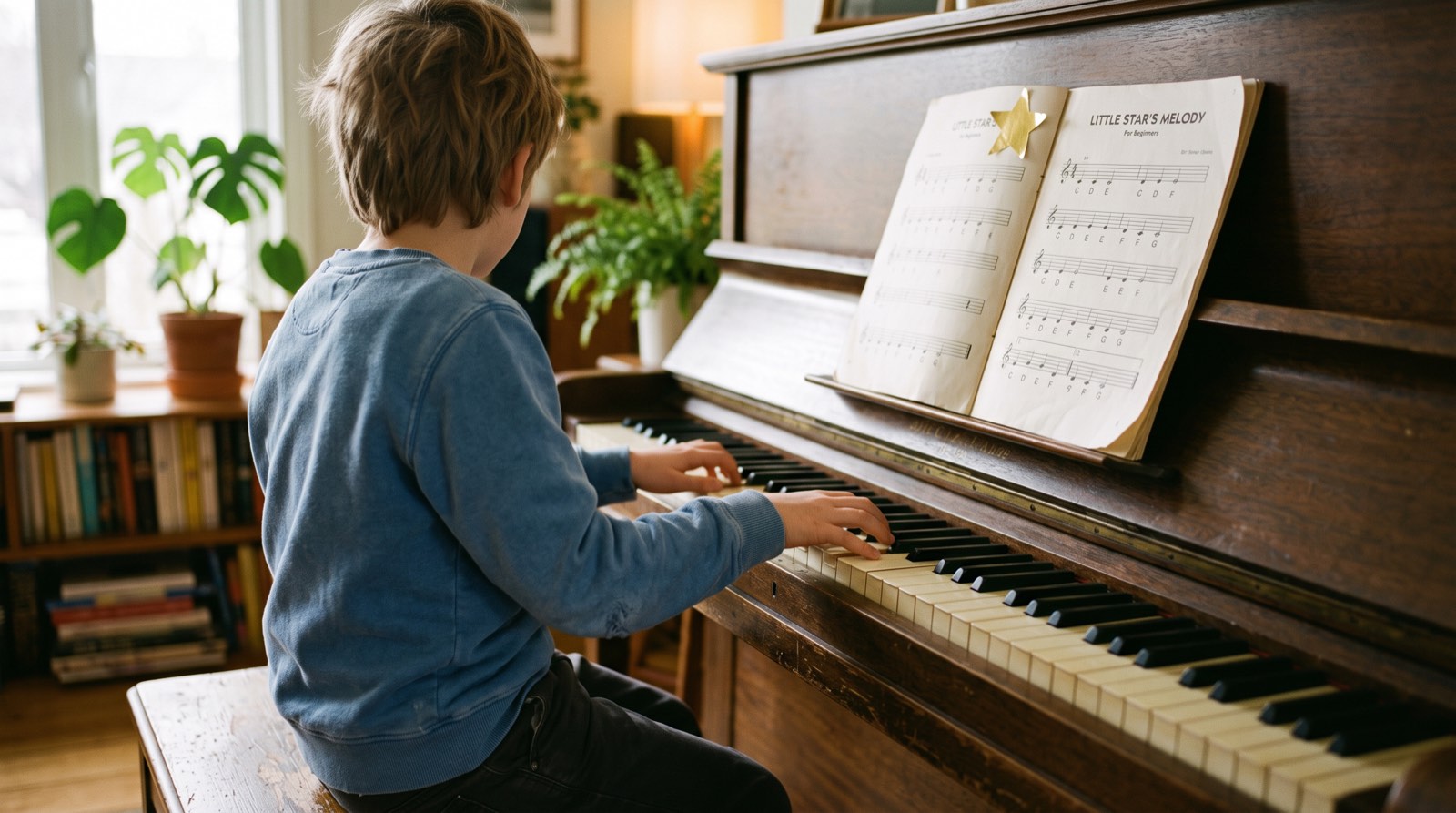
There is no finish line in piano, but there are clear milestones. With weekly lessons and regular practice, most children play simple songs with both hands within a few months, and reach a solid beginner level in about a year. How fast it goes depends on age, practice and the teacher, much more than on talent.
A typical first year
These are common milestones for a child with a weekly lesson and short practice most days. Every child moves at their own pace.
The first few weeks. Your child learns to find notes on the keyboard, uses finger numbers, builds a good hand shape and counts simple rhythms. They usually play short tunes with one hand.
One to three months. Simple songs come with each hand, followed by the first pieces that use both hands, usually taking turns.
Three to six months. Your child plays easy pieces with both hands together, reads basic sheet music and learns a first simple chord or two.
Six to twelve months. By now your child is a solid beginner. They read simple music on their own, have a handful of pieces they can play for family, and starts to play different things in each hand at the same time.
After the first year
From here the music gets more interesting: longer pieces, more chords, playing with more feeling, and more choice about what to learn. Many students reach an early intermediate level after two to three years, where they can play a lot of popular and classical music written for students.
Your child's goal matters. Playing favorite songs with chords is a different goal from reading complex classical pieces, and each takes a different amount of time. Tell the teacher what your child wants, so the milestones fit.
What speeds it up
- Practice most days. Short, regular practice beats long, rare practice every time. Our guide to how long to practice has amounts by age.
- A good match with the teacher. A child who likes their teacher works harder and stays longer.
- Music they love. A piece your child chose gets practiced without reminders.
- Something at home that feels like a piano. Full-size keys, and ideally weighted ones.
- Playing for someone. A small family concert or a recording gives practice a reason.
What slows it down
Long gaps between lessons, practice that only happens the night before, and music that is far too hard or far too easy. Summer breaks are fine, but a little playing over the break keeps your child from losing ground.
Does age change how long it takes?
Yes, but not always the way people expect. Younger children often need more time for the first steps, because reading and focus are still developing. Older beginners usually move faster at first. Children who start at 5 and children who start at 8 often end up in a similar place a few years later. If you are still deciding when to begin, see our guide to what age to start piano.
Piano lessons in Denver
Progress is easier to see with small goals along the way, so ask your teacher to set some you can both track. Music 4 Humans piano teachers teach kids, teens and adults at our recording studio in southwest Denver and online.
Tell us about your child and we will match you with a teacher, or read what happens in a first piano lesson.
Common questions
Can my child learn piano in a year? They can become a solid beginner in a year, with a handful of pieces to play. Piano keeps growing for as long as they keep playing.
Is my child behind? Most likely not. Progress comes in bursts, and plateaus are normal. Ask the teacher how your child is doing compared with their own goals.
How long until they can play a real song? Simple versions of songs your child knows often come within the first few months.