

What Happens in a First Piano Lesson?
Published
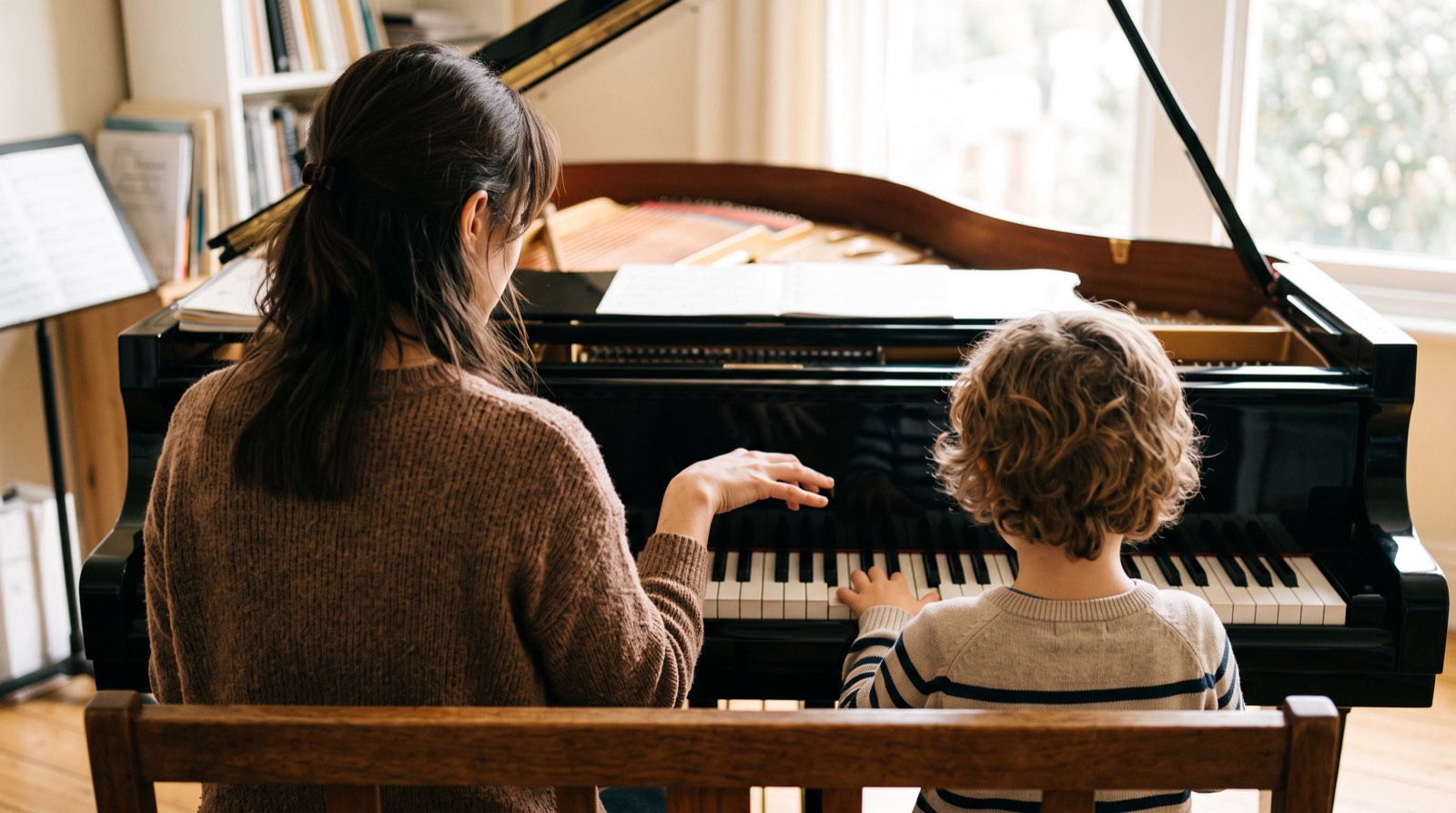
A first piano lesson is mostly about meeting the teacher and having fun at the keys. Nobody expects your child to play a song. By the end, most children can find a few notes, know their finger numbers, and leave with something small to practice. This guide walks through what usually happens and how you can help your child feel ready.
What happens in a first lesson
Getting to know each other. The teacher asks your child what music they like, why they want to play, and whether they have tried piano before. This is how the teacher decides where to start.
Finding their way around the keys. Black keys come in groups of two and three. Middle C sits just left of a group of two. Most children find this part surprisingly fun.
Finger numbers. Thumbs are 1, pinkies are 5, on both hands. Piano music uses these numbers everywhere.
Sitting and hand shape. How far to sit from the keys, a tall back, and curved fingers, like holding a small ball. Good habits from day one save a lot of fixing later.
A first rhythm or tune. Many teachers end with clapping a simple rhythm or playing a short pattern on the black keys, so your child leaves having made music.
Something to practice. Usually one or two small tasks for the week, written down for you.
How to get ready
- Have something to play at home. A keyboard with full-size keys is enough to start. Our guide to choosing a keyboard or piano explains the options.
- Trim fingernails. Long nails click on the keys and make curved fingers hard.
- Tell your child what to expect. "You will meet your teacher and learn where the notes live" is less scary than "your first piano lesson."
- Arrive a few minutes early. Or, for online lessons, set up the device ten minutes before so the camera shows your child's hands and the keys.
- Bring a notebook. Or plan to take a photo of the teacher's notes.
Should a parent stay in the lesson?
For children under about 8, yes, at least for the first few lessons. You will hear exactly what the teacher wants practiced, and you will be able to help at home. Sit a little back and let the teacher lead. Older children and teens often do better on their own once they are settled.
What to do after
Ask your child to show you one thing they learned. Then pick a practice time for the week, even five minutes a day. The first week sets the habit, so keep it short and easy. If your child left smiling, the lesson did its job.
Wondering if your child is old enough to start? Our guide to what age to start piano has a quick readiness check.
Piano lessons in Denver
The easiest way to see all of this for yourself is a trial lesson with one of our piano teachers, at our recording studio in southwest Denver or online from home.
Tell us about your child and we will match you with a teacher, or browse our piano teachers.
Common questions
How long is a first lesson? Most first lessons for young beginners run about 30 minutes. Your teacher will confirm the length when you book.
What if my child is shy? That is normal. Good teachers start with easy, playful things and let a shy child warm up at their own pace.
Will my child play a song in the first lesson? They might learn a very short one. The real goal is that they enjoy it and want to come back.