

What Age Should My Child Start Piano Lessons?
Published
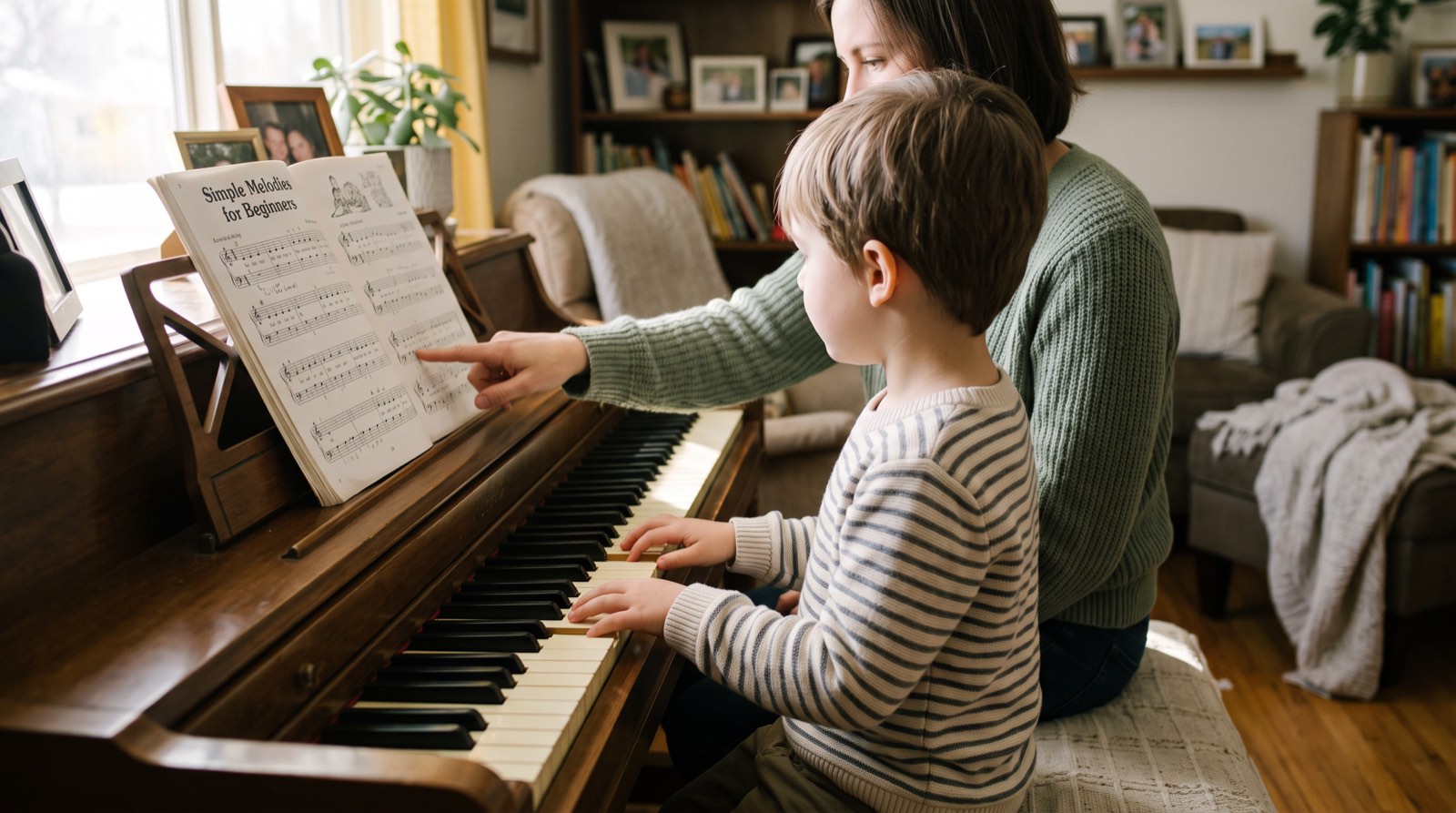
Most children are ready for piano lessons somewhere between 5 and 7. Some are ready at 4, and plenty start happily at 9, 12 or 40. The birthday is not really what decides it. What matters is whether a few small skills have clicked, and whether your child actually wants to play.
This guide covers the signs to look for, what to expect at each age, and what parents should know before the first lesson.
A quick readiness check you can do at home
Sit your child at a piano or keyboard and see how many of these they can do.
- Press one key and listen. A child who is ready plays single notes and listens to how each one sounds. A child who is not ready yet bangs with a whole hand. Both are normal; only one is ready for lessons.
- Press a key with one finger, then another. Try the pointer finger first, then the pinky. If the other fingers stay mostly still, their hands are ready.
- Say the letters A to G and count to five. Notes are named with those seven letters, and young pianists number their fingers 1 to 5.
- Tell high from low and left from right. Play a high note and a low note and ask which is which.
- Follow a two-step direction. "Put your thumb here, then play this key." That is most of a first lesson.
- Stay with it for about 15 to 20 minutes. Lessons for young children are short, but they still need to sit and listen for a while.
- Take a correction without falling apart. A teacher is a new adult saying "try it this way." A child who can hear that and try again is ready to learn from one.
Four or more, plus real interest, and your child is probably ready. Interest matters more than anything else on the list. A curious 5-year-old usually does better than a reluctant 8-year-old.
Age by age
Ages 3 and 4. Most children this age are not ready for formal lessons, and that is fine. Singing together, clapping along to songs, dancing and playing on a toy keyboard all build the ear and the sense of rhythm that piano needs later. Some 4-year-olds do well in short, playful lessons with a teacher who enjoys small children. If you think yours is one of them, tell us and we will look for that kind of teacher.
Ages 5 and 6. This is when many children start. They are learning to read, and reading music grows right alongside it. Expect to be involved: sitting in on lessons at first, and sitting beside them at practice.
Ages 7 to 9. Many teachers call this the easiest age to begin. Children this age focus longer, read well, and can start to practice a little on their own. They often catch up quickly with children who started younger.
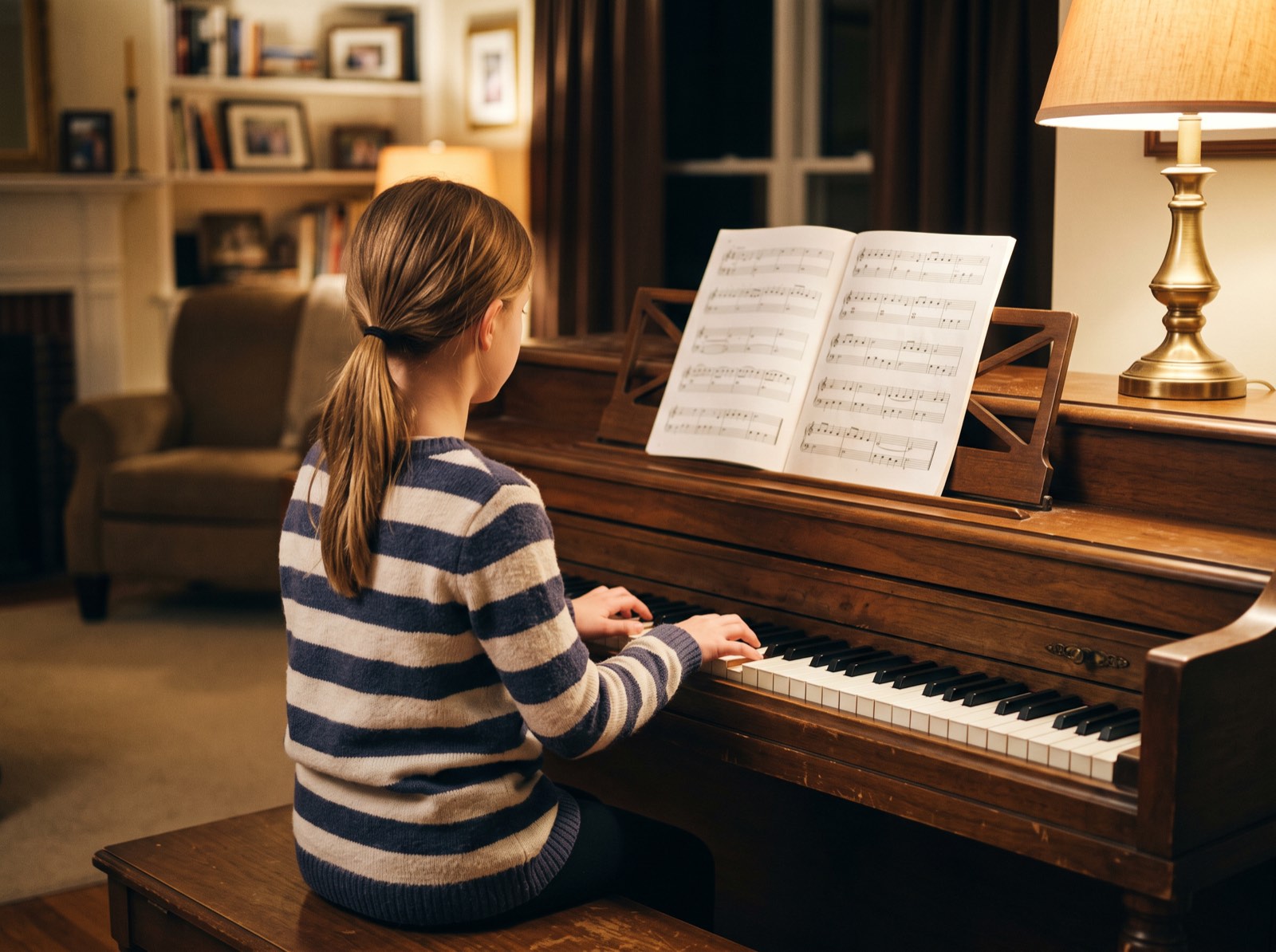
Ages 10 to 13. Older beginners move fast. They understand what they are doing and why, and they can choose music they love, which keeps them practicing. The main challenge is a busy schedule, so plan practice time from the start.
Teens and adults. It is never too late. Teens often arrive with a clear goal, like a song, a band or an audition, and that drives quick progress. Adults start from scratch all the time, and they are often the most motivated beginners of all.
What parents should expect
Lessons are short at first. Most young beginners start with 30-minute lessons once a week. Longer lessons come later, as focus grows.
Practice is short too, but it happens most days. About 10 to 20 minutes for ages 4 to 6, and 20 to 30 minutes for ages 7 to 9. Five short practices a week do more than one long one on Sunday.
Young children need you at practice. Most children under 8 cannot practice well alone yet. Sitting beside them, reading the teacher's notes and cheering them on is the job. You do not need to know any music to do it.
The whole family makes room. A regular practice time, like right after school or before dinner, works better than "when there is time."
Do you need a piano at home?
Your child does need something to practice on between lessons, but not an expensive piano to start. A keyboard with full-size keys is enough to begin. Tell your teacher what you have and ask what to look for before you upgrade. Small children also sit better with an adjustable bench or a footrest, so their feet are not dangling.
What if it is not working?
If lessons bring tears every week, it is okay to stop. Pushing a child who is not ready can turn them off piano for years. Take a few months off, keep music playing at home, and try again. A child who was not ready at 5 is often ready at 6, and they will not remember the false start.
The best test is a first lesson
A checklist can only tell you so much. A good teacher can tell within one lesson whether your child is ready, and how to make lessons work for them if they are close. That is what a trial lesson is for.
Piano lessons in Denver
Whether your child is 4 or 14, Music 4 Humans can match them with a piano teacher who suits their age. Lessons are at our recording studio in southwest Denver, at 1111 S Pierce St, or online from home. We also run after-school music classes at Asbury, Bromwell, French American School of Denver, Steck and University Park, and private lessons are a natural next step for students who want more.
Not sure if your child is ready? Tell us about them and we will match you with a teacher who fits your child's age and personality. You can also read about piano lessons in Denver or browse our piano teachers.
Common questions
Is 4 too young for piano lessons? Not always, but it is early. Some 4-year-olds are ready for short, playful lessons. Most do better with a year of singing and rhythm games first.
Is 10 too old to start piano? Not at all. Older beginners often progress faster than young ones, because they read well and focus longer.
How long should a young child practice piano? About 10 to 20 minutes a day for ages 4 to 6, and 20 to 30 minutes for ages 7 to 9, with a parent nearby at first.
Do I need to know music to help my child practice? Not at all. Your job is to sit with them, follow the teacher's notes and keep practice regular.
Does my child need a real piano? Not at first. A keyboard with full-size keys works for beginners. Ask your teacher before buying anything bigger.