What Age Should My Child Start Singing Lessons?
Published
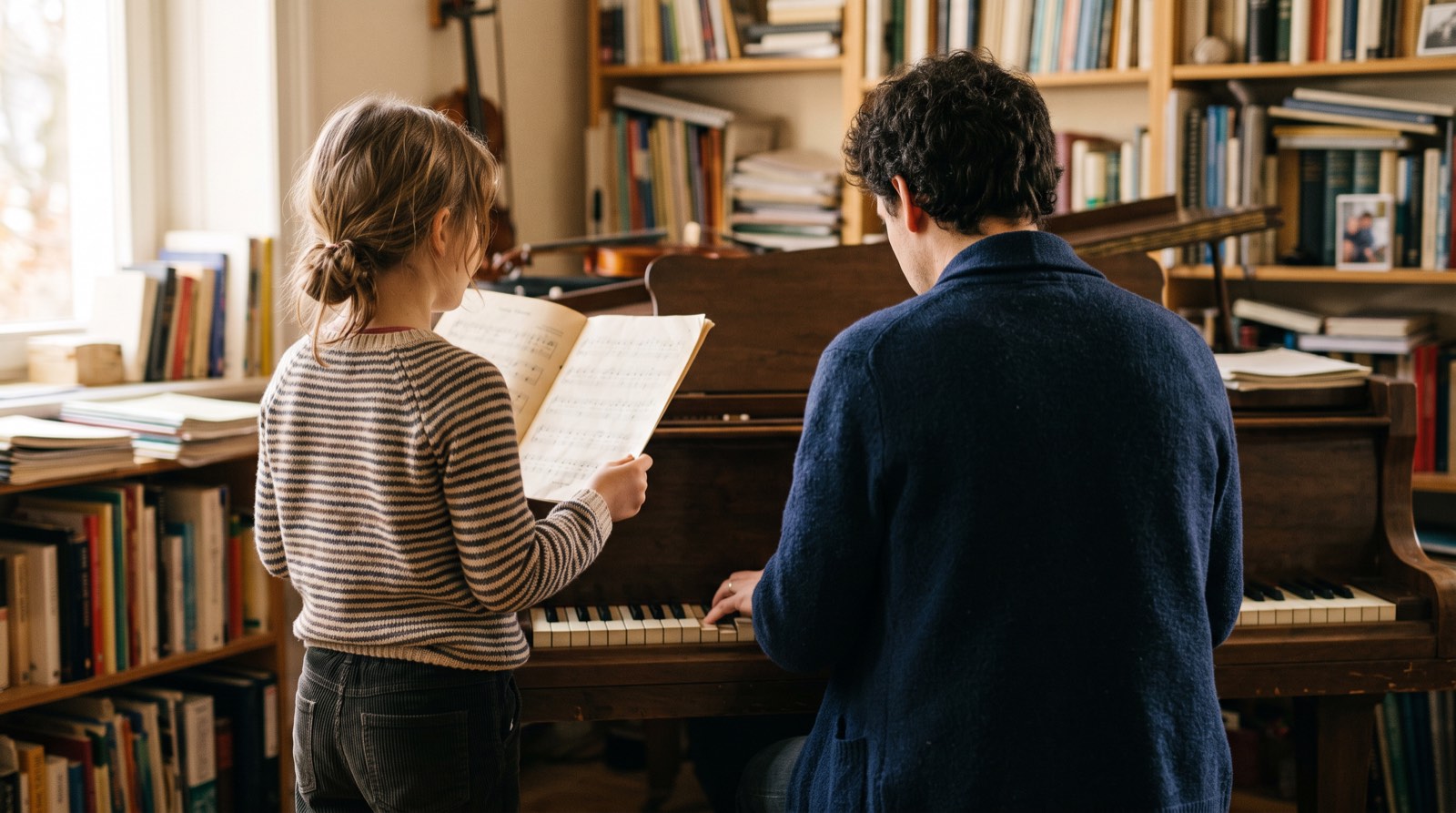
There is no single right age to start singing lessons, and voice teachers genuinely disagree about it. Many happily teach children from about 7 or 8 in short, gentle lessons. Others prefer to wait until 10 or 12 for focused technique, and suggest a choir first. What every good teacher agrees on is this: a child's voice is still growing, so early lessons should be about healthy, joyful singing, not sounding like a grown-up star.
Why age matters a little more for singing
With most instruments, the instrument is the same size whether a child or an adult plays it. With singing, the instrument is your child's own body, and it changes a great deal through childhood and again at puberty. Young voices are lighter and higher, and they tire more quickly. That is why a good children's voice teacher keeps lessons short, avoids pushing loud or very high singing, and never asks a child to copy an adult singer's power.
Signs your child is ready
- They sing all the time, in the car, in the shower, along with every song they know.
- They can match a simple tune. If you sing a short line and they can sing it back, close enough, the most important skill is already there.
- They can focus for about 20 to 30 minutes and follow a teacher's directions.
- They are comfortable singing in front of one person. Some children are shy at first, and that usually passes with a warm teacher.
- They are asking for it. A child who wants lessons gets much more out of them.
Age by age
Ages 4 to 6. Singing games, music classes and simply singing together at home are perfect. Formal voice lessons are usually not needed yet. If a child this age wants lessons, look for a teacher who works with very young children through play.
Ages 7 to 9. Many children start private lessons around now. Good lessons at this age focus on singing in tune, rhythm, simple breathing, posture, reading a little music and, above all, enjoying it. A school or community choir is also a wonderful start.
Ages 10 to 12. A great age for private lessons. Children can practice on their own, work on technique more deliberately and prepare for school musicals and auditions.
Teens. The voice changes during puberty, for girls as well as boys, and a teacher can help a teen keep singing comfortably through it. Many teens come in with clear goals: a musical, a choir audition, songwriting or a band.
Adults. It is never too late. Adult beginners often progress quickly because they practice with purpose.
What to avoid
Be wary of any lessons that push a young child to belt loudly, sing very high or very low for long, or imitate an adult pop singer's sound. If your child's voice sounds hoarse after singing, the singing was too much. Healthy singing should feel easy.
Singing lessons in Denver
Whether your child is 7 or 17, a trial lesson is the easiest way to see whether private lessons are right for them now. Music 4 Humans voice teachers teach kids, teens and adults at our recording studio in southwest Denver and online. We also run after-school music classes at five Denver schools.
Tell us about your child and we will match you with a voice teacher who works well with their age, or read one of our teachers on what to expect from children's voice lessons.
Common questions
Can singing lessons damage a child's voice? Good lessons protect it. Lessons that push too loud, too high or too long can strain a young voice, which is why the teacher matters so much.
Should my child do choir or private lessons first? Either is a good start. Choir builds listening, harmony and confidence in a group, and private lessons give individual attention. Many children do both.