

How to Breathe for Singing (and What Sing from Your Diaphragm Means)
Published
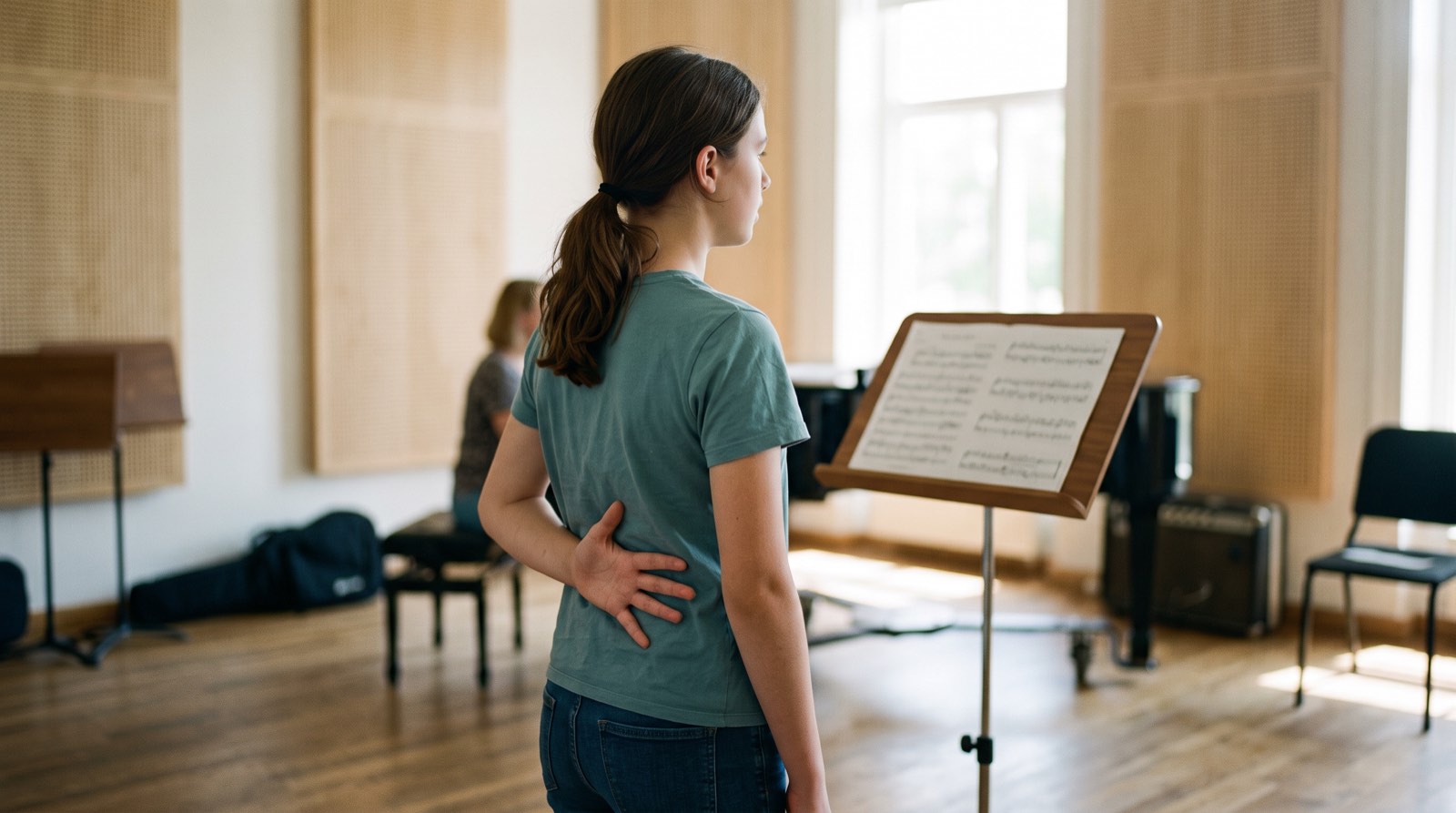
Every singer has heard "sing from your diaphragm," and almost nobody explains what it means. Good breathing for singing is simpler than it sounds: breathe in low and easily, without lifting your shoulders, and then let the air out steadily as you sing. Singers call that steady control "breath support," and it is what lets a note stay strong and in tune to the end of a phrase.
What the diaphragm actually does
The diaphragm is a dome-shaped muscle under your lungs. When you breathe in, it tightens and moves down, making room for air, which is why your belly and lower ribs move outward. When you breathe out, it relaxes and moves back up. You cannot really feel it or squeeze it directly. So "sing from your diaphragm" is really shorthand for breathing low and deep, and then controlling the outgoing air with the muscles around your ribs and middle.
Step 1: Breathe in low
Stand tall with your feet hip-width apart, knees soft, shoulders relaxed. Put one hand on your lower ribs and one on your stomach. Breathe in slowly through your nose and feel both hands move outward. Your shoulders and chest should stay mostly still. If your shoulders rise, you are breathing too high, which tends to tighten the throat.
Step 2: Let the air out slowly
Breathe out on a long, steady "sss" sound. Try to keep your ribs from collapsing straight away, and let the air come out evenly. Time it. Many beginners start around 10 to 15 seconds and build up with practice. This is the feeling of support: steady air, not pushed air.
Step 3: Add sound
Now do the same thing on a comfortable note, "ah," holding it steadily. Listen for a note that stays the same strength and pitch all the way through. Then try a short phrase of a song, taking a calm, low breath before it.
Common mistakes
- Gasping a big, high breath. You rarely need a huge breath. A comfortable, low one is usually enough.
- Pushing the air. Support is steady, not forceful. Pushing makes notes loud, tight and sharp.
- Running out of air at the end of phrases. Plan where to breathe. Mark breath spots in your music with a small tick.
- Slumping. Good posture gives the lungs room. Stand or sit tall, without stiffness.
A daily breathing exercise
Once a day, take three low breaths and let each one out on a slow "sss," then on a hum, then on a sung note. It takes two minutes and fits naturally at the start of the warm-up in our guide to warming up your voice.
Singing lessons in Denver
Breathing is much easier to learn with someone watching, because a teacher can see a rising shoulder or a tight jaw that you cannot. Music 4 Humans voice teachers teach kids, teens and adults at our recording studio in southwest Denver and online.
Tell us about yourself or your child and we will match you with a voice teacher, or browse our voice teachers.
Common questions
Should my stomach go in or out when I breathe in? It should move out. As you breathe in low, the belly and lower ribs move outward.
Do children need to learn breath support? In a simple, playful way, yes. Blowing out imaginary birthday candles slowly, or making a long "sss," teaches the same idea without any jargon.
Will breathing exercises make me louder? They make you steadier and more controlled, which often sounds fuller. Volume comes later, and should never be forced.