

How to Sing in Tune: Practical Tips for Beginners
Published
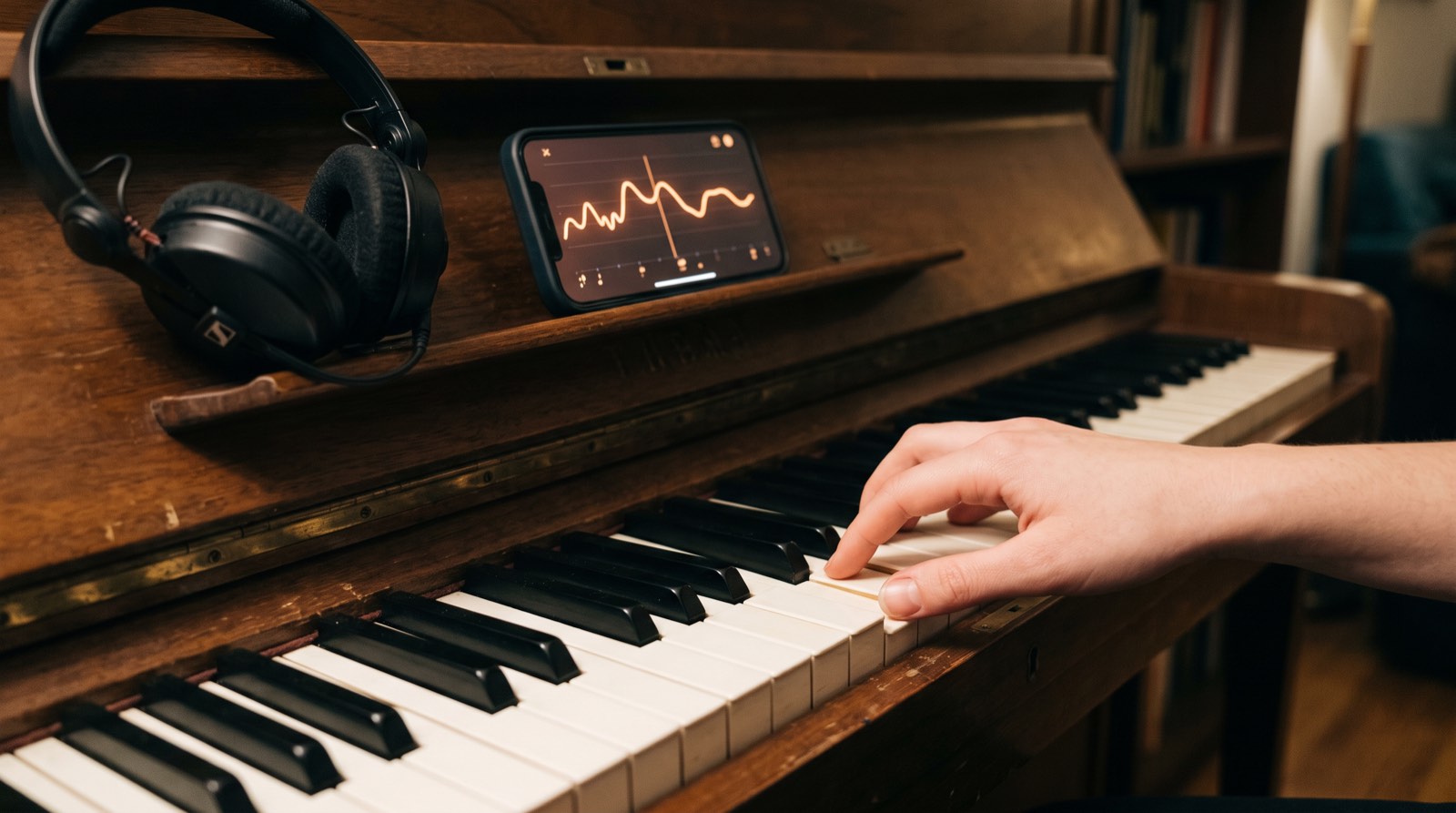
Singing in tune starts with one skill: hearing a note and singing that same note back. It is called pitch matching, and it can be practiced like anything else. With a few minutes of the right practice each day, most beginners hear clear improvement within a few weeks.
Listen, think, then sing
The most useful habit for singing in tune is to add a step in the middle. Most beginners hear a note and immediately sing. Instead:
- Listen to the note.
- Think it. Hear it in your head, as if you were singing it silently.
- Hum it, quietly.
- Sing it aloud on an easy vowel like "ah" or "oo."
That short pause, imagining the note before singing, makes a remarkable difference.
Try it with our tuner
The tuner below works right in your browser. Tap a note to hear it, press Start, then sing the same note back on an easy "ah," using the steps above. When the line sits in the green middle, you are on the note. Left of the middle is a little low (flat), and right of it is a little high (sharp). If the notes feel too high, choose lower voices in the menu.
This tuner needs JavaScript and a microphone. A free chromatic tuner app on a phone works the same way.
A daily pitch exercise
Play a note on the tuner above, a piano, a keyboard or a free piano app, in a comfortable part of your voice. Match it using the steps above. Then check yourself:
- Use a tuner. The one above, or a free chromatic tuner app on a phone, shows whether you are on the note, a little high (sharp) or a little low (flat). If you play the reference note from another device, wear headphones so the tuner only hears your voice.
- Record yourself. Your voice sounds different from inside your head. Listening back is the most reliable feedback you can get, and it gets easier with time.
When single notes feel steady, try tiny patterns: do re mi re do, or a simple five-note scale. Only then move on to short phrases of songs.
Why notes go sharp or flat
- The song is too high or too low. Change the key so the song sits comfortably in your voice.
- Not enough breath at the end of a phrase. Notes often go flat when air runs out. Our guide to breathing for singing helps.
- Pushing or straining. Forced notes often go sharp. Sing a little more gently.
- Not listening to the music around you. Sing along quietly enough that you can still hear the piano or the track.
Sing with something steady
Singing along with a piano, a guitar or a recording gives your ear a reference to lock onto. Start with simple, slow songs in a comfortable range. Singing with a friend or in a choir is great practice too, as long as you can hear the notes around you.
Singing lessons in Denver
A teacher can hear exactly which notes drift and why, and choose songs in the right range for your voice. Music 4 Humans voice teachers teach kids, teens and adults at our recording studio in southwest Denver and online.
Tell us about yourself or your child and we will match you with a voice teacher, or read whether anyone can learn to sing.
Common questions
Why do I sound out of tune on recordings but fine in my head? Everyone hears their own voice differently from inside, through the bones of the head. Recordings show what others hear, which is why they are so useful for practice.
Can a pitch-correction app help me learn? Tuner apps are excellent for checking practice. Auto-tune effects on recordings hide problems rather than fixing them.