

What Size Guitar Does My Child Need?
Published
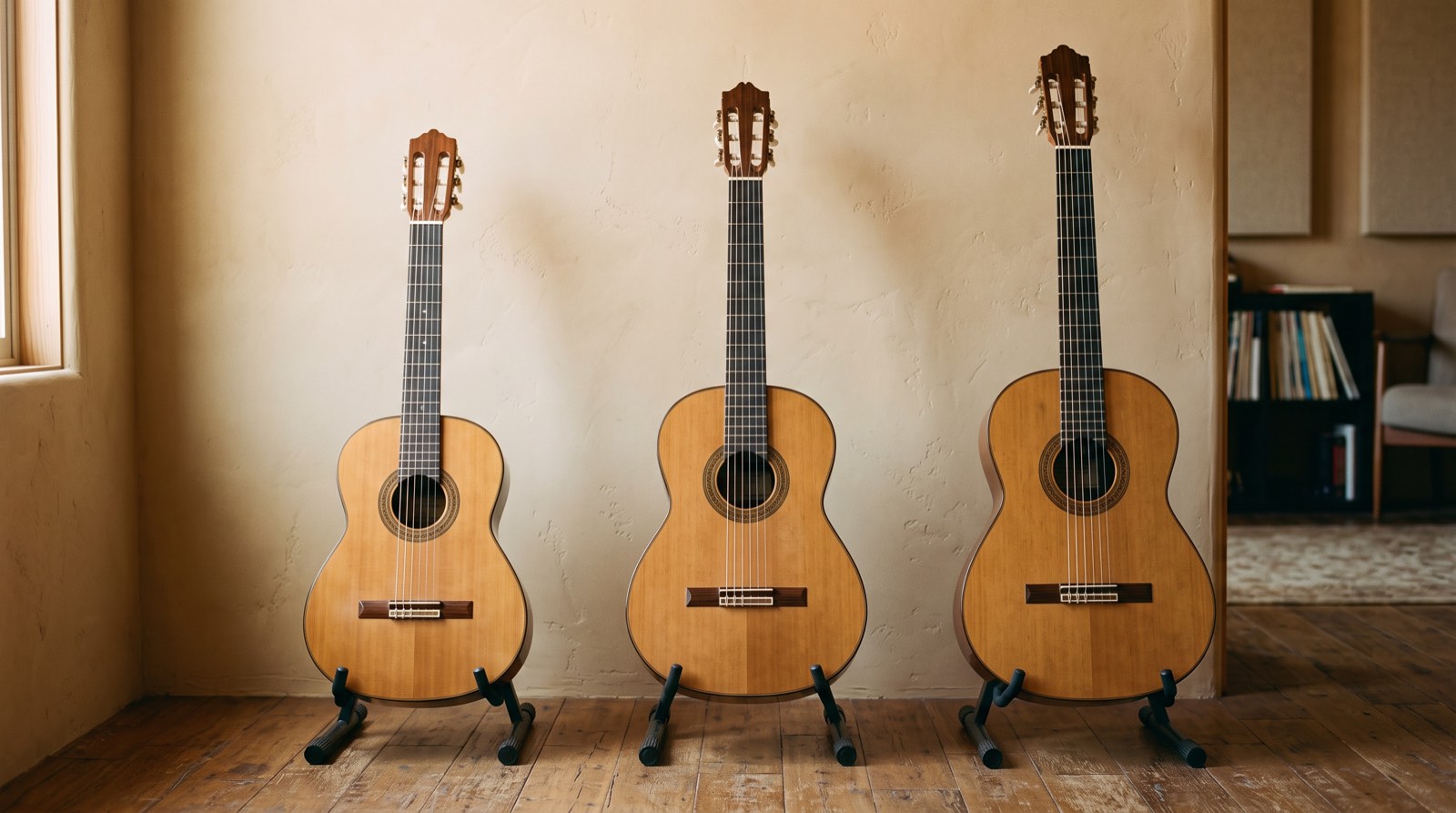
The right guitar size makes a bigger difference to a young beginner than almost anything else you can buy. A guitar that is too big is hard to hold, hard to reach and tiring to play, and children often blame themselves rather than the instrument. Age charts are a useful starting point, but the real test is how the guitar fits your child.
Guitar sizes at a glance
Children's guitars are usually sold as fractions of a full-size guitar. These ranges are a starting point, and children of the same age can need different sizes.
- Half size (1/2): usually ages 5 to 8.
- Three-quarter size (3/4): usually ages 8 to 12.
- Full size (4/4): usually from about 12, or when your child is around 5 feet tall.
Some stores also sell a quarter size for very small children, and some teenagers and smaller adults prefer a slightly smaller full-size guitar, sometimes called a parlor guitar.
The fit test
Height and arm length matter more than age, so if you can, let your child try the guitar before you buy it. Ask them to sit on a chair with the guitar resting on their leg, the way they would in a lesson, and check three things.
- They can wrap their strumming arm comfortably over the body and rest their hand near the sound hole without hunching their shoulder.
- They can reach the first fret with their other hand while their elbow is still slightly bent. If their arm has to stretch out straight, the guitar is too big.
- Their feet are on the floor or a footstool, and the guitar does not slide off their leg.
If your child is between sizes, most teachers suggest the smaller one. A guitar that feels easy to play gets picked up more, and your child will move to the next size when they grow.
What about electric guitars?
Electric guitars have thinner bodies than acoustic guitars, so a full-size or short-scale electric can feel smaller than a full-size acoustic. Many 9 to 12-year-olds manage a short-scale electric comfortably. The fit test above still applies.
Nylon or steel strings?
For children under about 10, nylon strings are usually the kindest choice. They are softer to press and much easier on sore fingertips. Our guide to nylon-string and steel-string guitars covers the difference in more detail.
Guitar lessons in Denver
If you are not sure which size to buy, ask before you shop. Music 4 Humans guitar teachers can check the fit in a first lesson and tell you whether to size up or down. Lessons are at our recording studio in southwest Denver or online.
Tell us about your child and we will match you with a guitar teacher, or read our guide to what age to start guitar.
Common questions
Should I buy a bigger guitar for my child to grow into? It is tempting, but a guitar that is too big makes the early months much harder. Buy the size that fits now.
How do I know when to move up a size? When the fit test feels cramped, or your child's teacher suggests it. Many children move up one size every two or three years.
Do adults with small hands need a smaller guitar? Some find one much easier. A short-scale or parlor guitar can be much more comfortable, and there is no rule that says an adult must play a full-size dreadnought.