

Acoustic, Electric or Classical: Which Guitar Should a Beginner Start On?
Published
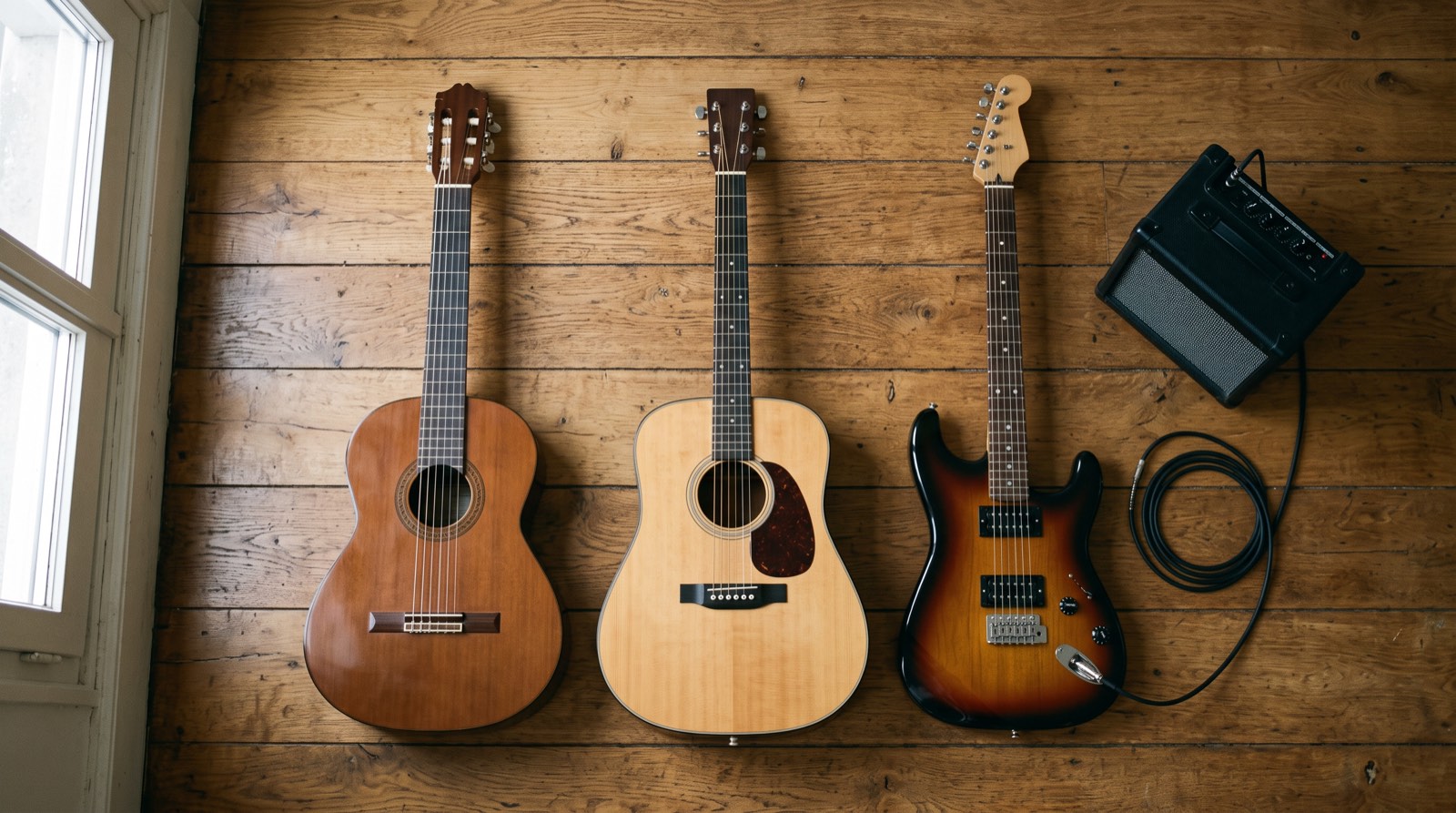
There are three kinds of guitar a beginner usually chooses between: a classical guitar with nylon strings, an acoustic guitar with steel strings, and an electric guitar. Each one is a good place to start. The best choice depends on the music your child wants to play, the size of their hands, and how much finger soreness they can handle in the first few weeks.
Classical guitar (nylon strings)
Classical guitars have nylon strings, which are soft and press down easily. That makes them the gentlest choice for young fingers, and the reason most teachers start children under about 10 on one. They have a warm, mellow sound that suits classical, folk and Latin music, and plenty of pop songs sound lovely on them too.
The trade-off is the neck, which is wider and flatter than on other guitars. That can feel like a stretch for small hands on a full-size classical guitar, which is why children play smaller sizes.
Acoustic guitar (steel strings)
Steel-string acoustic guitars are what most people picture when they think of strumming along to a song. They are louder and brighter than classical guitars, with a narrower neck. The steel strings are harder on the fingertips, so the first few weeks are more uncomfortable, but that passes as calluses form.
They are a great choice for older children, teens and adults who want to play pop, rock, folk and singer-songwriter music.
Electric guitar
Electric guitars usually have thinner steel strings and a slim neck, so many beginners actually find them the easiest to press. They are quiet unplugged and need an amplifier to be heard, which also means you can practice with headphones on many small amps.
If your child is already in love with rock, metal or the sound of a particular band, an electric guitar can be the thing that keeps them practicing. A small practice amplifier and a cable are part of the cost, so budget for both.
Which should your child start on?
Under about 10: a classical guitar in the right size is usually best. It is the kindest to small fingers. Our guide to what size guitar your child needs explains how to check the fit.
10 and up, loves strumming songs: a steel-string acoustic.
10 and up, loves rock: an electric guitar with a small amp.
Whatever they start on, the skills carry over. Chords, rhythm and reading are the same on all three, and many guitarists play all of them eventually.
Guitar lessons in Denver
A teacher can help your child choose between the three once they have heard what music your child loves. Music 4 Humans guitar teachers teach acoustic, classical and electric guitar to kids, teens and adults, at our recording studio in southwest Denver and online.
Tell us about your child and we will match you with a guitar teacher, or browse our guitar teachers.
Common questions
Is electric guitar harder than acoustic? Usually it is easier to press, because the strings are lighter. The extra gear, an amp and a cable, is the main difference.
Can a child switch from classical to electric later? Very easily. Everything they learned carries over, and the electric will feel light by comparison.