

Song Structure Explained: Verse, Chorus, Bridge and Beyond
Published
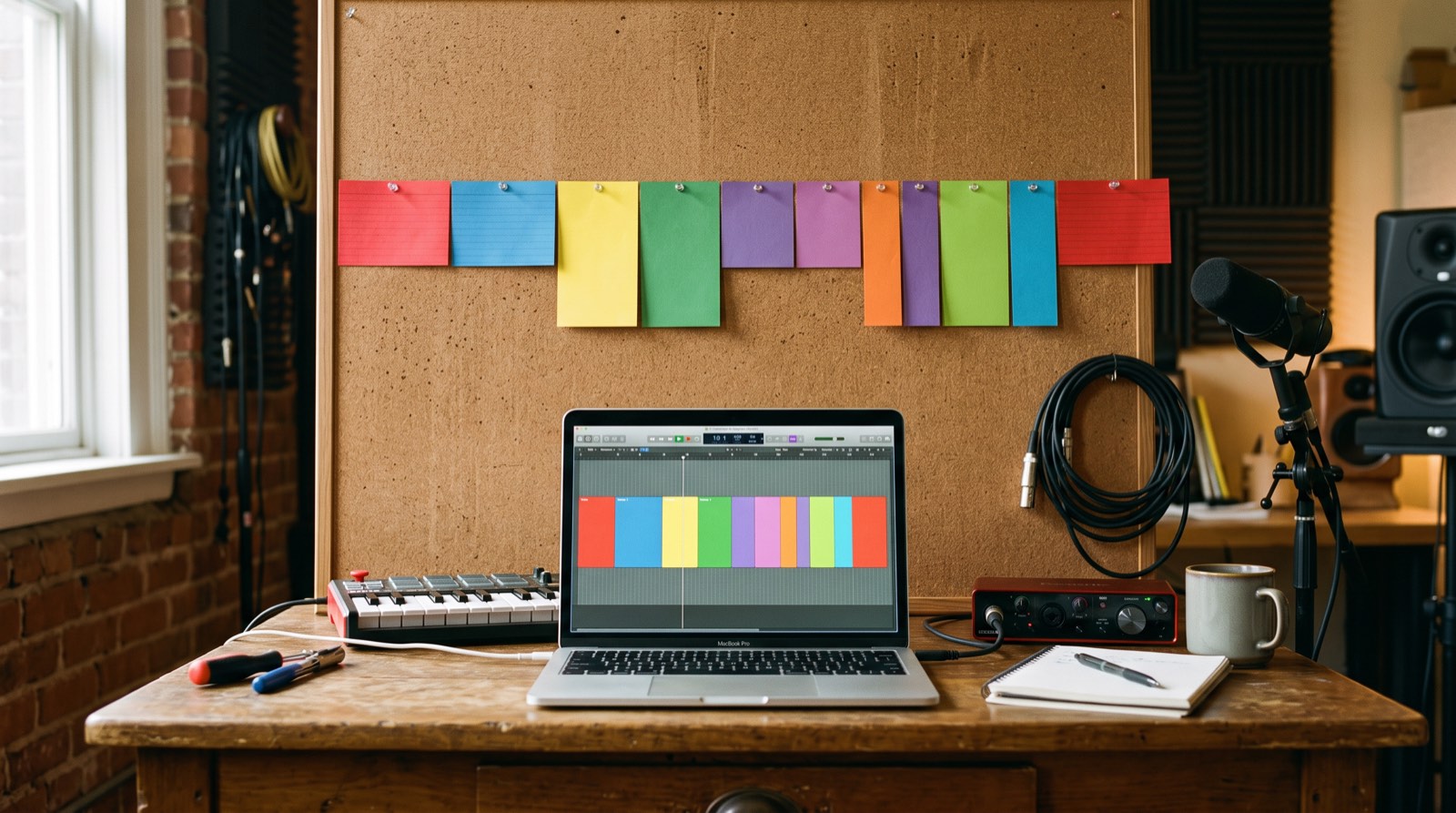
Song structure is the order of the sections in a song and the job each one does. Once you understand it, an eight-bar loop can grow into a complete track that takes a listener somewhere. The trick is to think about what each section is for before you worry about what it is called.
What each section does
- Intro sets the sound and the tempo, and promises what the song will be. It usually lasts 4 to 8 bars.
- Verse tells the story and moves it forward. It usually lasts 8 to 16 bars.
- Pre-chorus climbs toward the hook, so the chorus feels like an arrival. It usually lasts 4 to 8 bars.
- Chorus is the destination: the biggest words and the biggest feeling. It usually lasts 8 to 16 bars.
- Bridge leaves the pattern so the last chorus lands harder. It usually lasts 8 bars.
- Outro releases the energy and ends on purpose. It usually lasts 4 to 8 bars.
The most common shapes
Verse and chorus. Verse, chorus, verse, chorus, bridge, chorus. This is the main form of popular music, and the chorus is home base.
With a pre-chorus. The same idea, with a short climb before each chorus.
AABA. A statement, the statement again, a departure, then a return. It is common in older standards and ballads.
Loop and layers. In a lot of beat-based and electronic music, there are no verses at all. The form is what you add and take away: a thin start, a build, a full section, a stripped-back breakdown, and the full section again.
What should change between sections
A new section is not just a new color on your screen. Something real should change, and usually more than one thing:
- Melody: higher or lower, with wider leaps or a new rhythm.
- Chords: a new starting chord, or a short trip away from the loop.
- Instruments: parts drop out or pile on.
- Energy: quieter or louder, thinner or thicker.
- Groove: half-time, double-time, or drums that open up.
Verses are often lower, thinner and more spoken. Choruses are often higher, fuller and more sung. If your chorus does not feel bigger than your verse, change one of the things above.
Map a song you love
The fastest way to learn structure is to map a song you already know. Play it once and write down each section as you hear it, with a rough bar count: V8, C8, V8, C8, B8, C8. Find the part that keeps coming back, then mark where the music leaves it and where it returns. Do this for a few songs in different styles and you will start to hear structure everywhere.
Build a full track from your loop
- Start from your best eight-bar loop, like the one from your first beat.
- Copy it so you have a few minutes of music.
- Choose a shape, such as intro, verse, chorus, verse, chorus, bridge, chorus, outro.
- Thin out the verses and fill out the choruses using the change list above.
- For the bridge, change the chords or strip everything back to one instrument.
Learn music production in Denver
Turning loops into full songs is a big step we work on in our production classes. We teach music production and songwriting one on one, for teens and adults, at our recording studio in southwest Denver or online.
Tell us what you want to make and choose music production in the form, or read more about music lessons in Denver.
Common questions
How long should a song be? Most popular songs run between two and a half and four minutes, but there is no rule. End when the song has said what it needs to say.
Does every song need a bridge? Not every song needs one, and many great songs skip it. Use one when the song needs a break from the pattern before the final chorus.
What is a hook? The hook is the most memorable part of the song, often in the chorus. It might be a sung line, a melody or even a single sound.