What Age Should My Child Start Drum Lessons?
Published
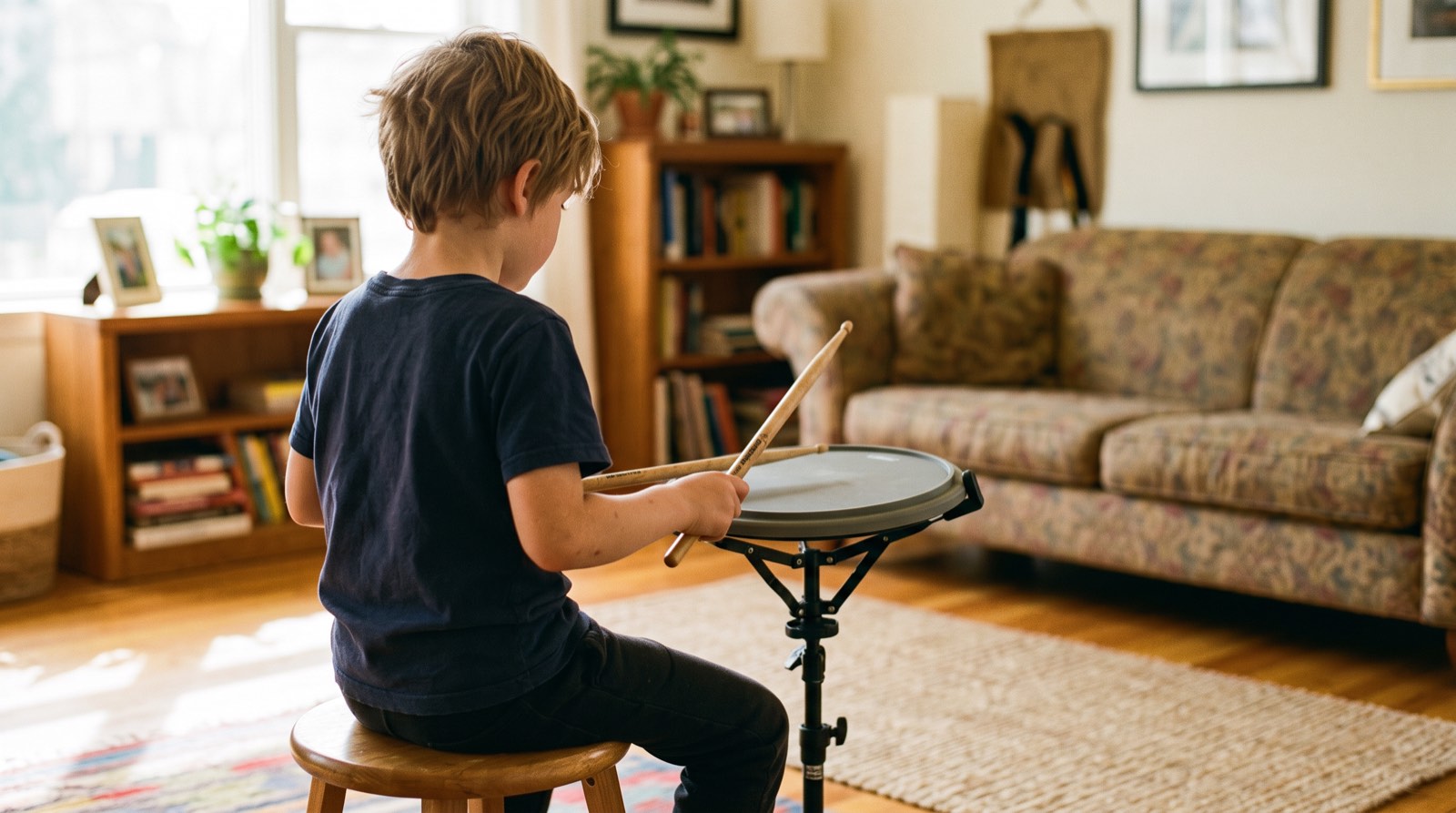
Most children are ready for drum lessons somewhere between 6 and 8. Some start happily at 5, especially on a practice pad, and plenty begin at 10, 15 or 50. The birthday matters less than a few simple signs: can your child hold the sticks comfortably, keep a steady beat, and follow a short instruction? If so, they are probably ready.
Signs your child is ready for drums
- They can keep a steady beat. Put on a song and ask them to clap or tap along. If they can stay roughly with the music for a minute, the most important drumming skill is already there.
- They can hold the sticks comfortably. Small hands may need lighter sticks, which are easy to find. The sticks should feel like part of the hand, not a weight to fight.
- They can follow a two-step direction. "Play four on the pad, then stop" is most of an early drum lesson.
- They can focus for about 20 to 30 minutes. Drum lessons for young children are short and active, but they still need to watch, listen and try again.
- They want to. A child who drums on the table, taps along to every song and asks for lessons will go further than one who was signed up without much enthusiasm.
Age by age
Ages 3 to 5. Most children this age are not ready for formal lessons, and that is fine. Banging on a toy drum, clapping along to songs and marching to music all build the sense of rhythm that drumming needs later. Some 5-year-olds do well in short, playful lessons on a practice pad.
Ages 6 to 8. This is when most children start. They can hold the sticks, follow a lesson and count a simple beat. Many begin on a practice pad, and a small junior kit fits children this age better than a full-size one.
Ages 9 to 12. A great age to begin. Their arms and legs reach a full kit more easily, they can coordinate hands and feet, and they often have strong opinions about the music they want to play.
Teens and adults. It is never too late. Teens often arrive wanting to join a band, and that goal drives fast progress. Adults start from scratch all the time.
Start on a practice pad
A child does not need a drum kit to start lessons. A practice pad and a pair of sticks are enough for the first months, and they are quiet, cheap and easy to set up. In our after-school music classes, beginners often start on practice pads before they ever sit at a kit. The control and rhythm they build there carry straight over.
A word about hearing
Acoustic drums are loud, much louder than most instruments. If your child plays a real kit, hearing protection should be part of the gear from the very first day. Child-size earmuffs make that easy.
If your child is not ready yet
Keep music and rhythm in the house: clapping games, dancing, tapping along to songs on a pillow or a practice pad. A child who was not ready at 5 is often ready at 6. Our older post on what rhythm is and how to improve it has a few ideas to try together.
Drum lessons in Denver
A trial lesson is the quickest way to know whether your child is ready, because a good teacher can tell within one lesson. Music 4 Humans drum teachers teach kids, teens and adults at our recording studio in southwest Denver and online.
Tell us about your child and we will match you with a drum teacher who suits their age, or read about drum lessons in Denver.
Common questions
Is 5 too young for drum lessons? Not always. A 5-year-old with real interest can do well in short lessons on a practice pad. Many do better with another year of rhythm games first.
Do we need a drum kit before the first lesson? You do not. Sticks and a practice pad are enough to start. Many families wait a few months before buying a kit.